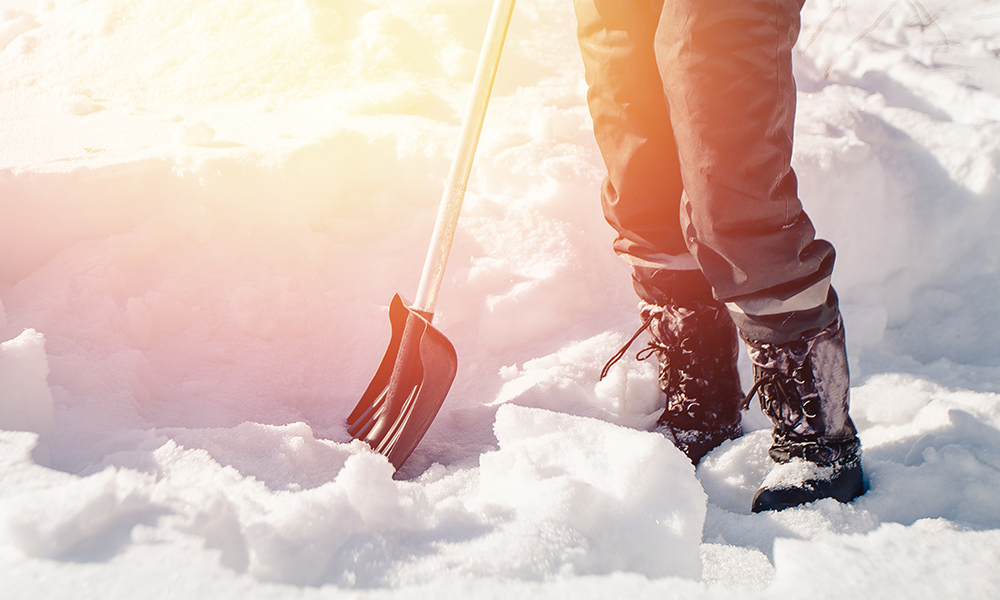
When Mother Nature unleashes her winter furry of snow and ice, the scenery can be beautiful - if you are enjoying the view from inside your warm home.
The aftermath of heavy snowfall, ice storm or blizzard can pose a danger to your health. Lots of planning and little common sense can not only avoid injury but save your life.
Here is some advice to consider before venturing outside to dig yourself or your car out of the drifts:
The Statistics
About 137,000 people in the United States are treated at medical facilities every year for snow shoveling injuries, according to healthline.com. We also know:
- About 28,000 people are treated in emergency rooms each year for issues related to shoveling snow.
- Each year, snow shoveling leads to approximately 100 deaths, according to pubmed.com. A 17-year study recorded 1,647 deaths, all of which were cardiac-related.
- Soft-tissue injuries accounted for more than half (54.7%) of the cases. Lower-back injuries made up a little more than a third (34.3%) of the cases, according to pubmed.com.
- Lacerations came in at 9 percent and fractures and heart episodes were at 7 percent each.
The Preparation
Just like sports or workout-related injuries, not being physically ready for shoveling causes most of the injury or health issues, according to doctors.
Selecting the right footwear is essential. Boots should have a good tread for grip on the snow and ice. Even falling in the soft snow can cause broken bones or sprains. You should test your boots' ability to provide traction and stability before shoveling.
You also should stretch your muscles before digging in. You wouldn't swim lots of laps at the pool without warming up your body first. Shoveling is hard exercise on your body, so you need to get your muscles ready.
Finally, you should select the appropriate clothing. Multiple layers allow your skin to breathe, but also absorb the sweat. You also should have a water-repellant outer layer to block snow from sticking to your body and becoming wet as it melts from your body heat.
The Safe Way to Shovel
Once you have warmed up your muscles and grab the shovel, make certain you:
- Use your thigh as a “teeter-totter” for the shovel.
- Scoop small amounts with each shovel load.
- Move your feet in the direction you want to scoop instead of reaching by overextending your back.
- Don’t twist your body when you’re scooping or dumping. Turn your entire body if you need to rotate.
- Takes breaks. Unless there is an urgent reason to clear the snow, you should take your time.
If you are age 50 or older, you might want to consider hiring a contractor or a neighborhood kid to clear a path on you driveway or sidewalk.
If you are not feeling well after shoveling snow, you should go to the emergency room or dial 911 as soon as possible. You could be suffering from a heart attack, hypothermia or frostbite.