
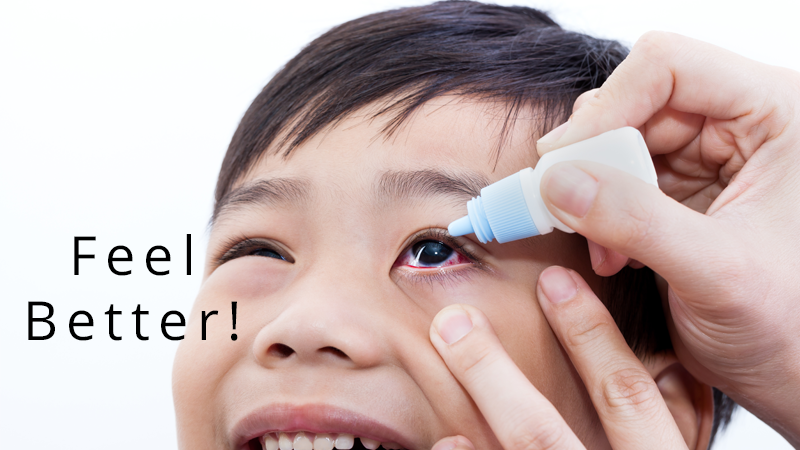
Pinkeye can be highly contagious. If your child or someone in your family has pinkeye, consult a family doctor or ophthalmologist. It’s important to determine exactly what’s going on, and what steps you should take to manage it.
Here are some common questions parents have about pinkeye in children.

Pinkeye is an infection or inflammation of the eye. Its name reflects its most obvious symptom: pinkness or redness in the eyelid and eyeball. The medical term for pinkeye is conjunctivitis, because it affects the conjunctiva - the transparent membrane that surrounds your eye.
Pinkeye can come with some, but not always all, of the following symptoms:
Some pinkeye is inflammation and some is an infection. Within the infectious type, some is bacterial and some is viral. These variables make it crucial to see a doctor.
Inflammatory pinkeye isn’t transmitted from person to person. It can come from contact with household chemicals, exposure to environmental irritants like vapors, taking medication, allergies, and rubbing. Allergies can also cause inflammation.
If it is caused by a bacterial infection, pinkeye is contagious between people. Your child could have gotten it from an infected person or contaminated surface. In children under two years of age, bacterial infection is the most common pinkeye source.
If it is caused by a virus, usually adenovirus, it is the most contagious variety. In children over two years of age, viral pinkeye is the most common diagnosis versus bacterial.
Most pinkeye will go away on its own in a week or two. However, your child may need eye drops or other medication based on a doctor’s diagnosis. Remember, pinkeye has many causes: inflammation, allergies, bacteria, viruses.
During the healing period, you can help your child feel more comfortable by using at-home strategies like warm compresses, over-the-counter pain relievers, and lubricating eye drops. To prevent the spread of infection, don’t share compresses or eye drops.
Limit the spread of contagious forms of pinkeye by taking the following preventive steps in your household.
Yes! This is why it is so important to determine the source of pinkeye. If it’s from an irritant in the environment, this irritant will need to be removed or your child will continue to experience symptoms.
For bacterial and viral pinkeye, your child can become reinfected - and other family members can be exposed - through eye, nose, and mouth secretions that sit on shared surfaces. You’ll need to step up your household cleaning routine when pinkeye flares up.
Common infection points include: makeup, hand towels, doorknobs, computer keyboards, TV remotes, cell phones, countertops, pillows, bedding, contact lenses, and eye drops.
Still have questions about pinkeye? Reach out to the experts at Johnson Memorial Health.